Resources
From the first night home to the years that follow.
Your First Weeks With Your Puppy
Here from your puppy packet? Start here.
Before Pickup
- Set up a crate and a puppy-proofed area with baby gates.
- Have familiar food, bowls, a leash, and appropriate chew toys ready.
- Choose a veterinarian and arrange the first visit.
The First Night
- Keep the crate near you while your puppy gets used to the new space.
- Take your puppy out just before bed.
- Keep overnight potty trips quiet and return to the crate afterward.
The First Vet Visit
- Bring the health and vaccination records from your puppy packet.
- Bring the food name and how much your puppy eats each day.
- Ask about safe outings, upcoming vaccines, and your puppy’s growth.
Crate Training
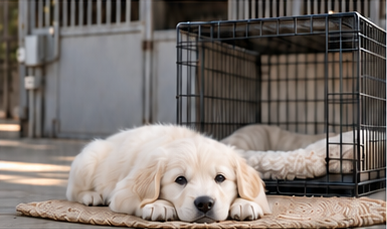
We introduce the crate at Saddle Creek before pickup. Keep it near you at first and let your puppy walk in for a little kibble. Once they’re comfortable going in, close the door briefly while you sit nearby. Build up time as your puppy settles.
If your puppy wakes at night, check whether they need a potty break. If they’re getting more distressed, stay nearby and make the next practice session easier.
Socialization
Start with short, positive experiences. Let your puppy watch a visitor from across the room, hear the vacuum from farther away, or explore a new surface. Give them room to approach or back away. Ask your vet which outings and puppy classes are appropriate for their vaccination stage and local exposure risks.
Reward-Based Training
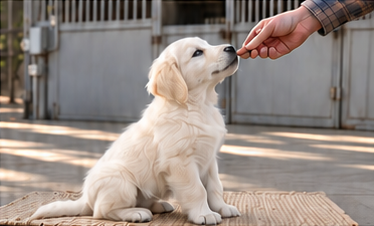
Say “yes” the moment your puppy does something you want to see again, then reward them. A few repetitions during meals or play fit easily into the day.
- Come. Start indoors a few feet away. Say “come” once, step back, and reward your puppy when they reach you.
- Polite greetings. Give attention when all four paws are on the floor. Pause the greeting if your puppy jumps.
- Settle. When your puppy lies down calmly on their mat, quietly place a piece of kibble between their paws.
Household Boundaries
Decide together which rooms and furniture your puppy can use. Give them one puppy-proofed area to start and have everyone use the same cues and rules. Take your puppy out after waking, eating, and playing, and reward them right after they finish outside.
Puppy Biting, Chewing, Digging & Resource Guarding
Puppies chew and dig. Some will chew just about anything they can reach. A few minutes out of sight can mean a chewed chair leg or a hole in the flower bed. Supervise your puppy when they’re loose in the house or yard, and give them more freedom as they learn the rules.
Use baby gates to make a designated puppy space. Set up a puppy-proofed area indoors with appropriate chew toys. Keep shoes, cords, and furniture you want to protect out of reach. Outside, stay with your puppy and redirect them if they start digging somewhere you want left alone. When you can’t watch them, bring them back to their puppy space.
Start practicing early. If your puppy grabs your sleeve or mouths your hands, pause play and offer a toy. It’s fairly common for puppies to want to hang on to a favorite item. Address guarding early and practice these cues while your puppy is relaxed.
Leave It
Before your puppy picks something up. Hold a piece of kibble in a closed hand. When they back away or look at you, say “yes” and reward from your other hand. Add “leave it” once they’re backing away consistently.
Trade
When your puppy already has something. Start with a toy they’re comfortable giving up. Offer a treat first and reward them when they let go. Pick up the toy once they’ve moved away. Give it back when it’s safe.
Let your puppy eat in peace. Teach children to get an adult if the puppy takes something. If your puppy stiffens, hovers over an item, or growls, step back and give them space. If guarding repeats or you see snapping or biting, ask your veterinarian for help early.
Health & Nutrition
Spay & Neuter Timing for Golden Retrievers
We encourage every Saddle Creek family to read this breed-specific UC Davis guidance before scheduling a spay or neuter. Bring it to your veterinarian to discuss the timing that’s right for your Golden.
Read the UC Davis GuidanceFeeding Your Golden Retriever Puppy
What to Feed
Choose a food advertised as Large Breed Puppy. Look for those words on the front of the bag. Keep feeding the same formula your puppy has been eating at Saddle Creek when they first come home. If you change foods later, make the transition gradually.
How Much
Start with the daily feeding guide on your puppy’s specific food and divide that amount across meals. If the guide says 1½ cups per day, for example, that’s ½ cup at each of three meals. Check portions with your vet as your puppy grows.
How Often
Start with three measured meals a day. Around six months, most puppies can move to two meals a day, morning and evening.
When to Switch
Ask your vet about adult food around your Golden’s first birthday. Many Goldens switch between 12 and 18 months, depending on their growth. Once your vet recommends the change, introduce the adult food gradually.
Flea & Tick Prevention
Ask your veterinarian about prevention for your puppy. The EPA guide explains how to choose and use flea and tick products safely.
Food & Supplements We Recommend
Life’s Abundance
Dog food we recommend to Saddle Creek families.
Visit Life’s AbundanceSaddle Creek Farms is a paid distributor for Life’s Abundance.
NuVet
A dog supplement brand we recommend to Saddle Creek families.
Visit NuVetSaddle Creek Farms is a paid distributor for NuVet.
Breed Education & Health Testing
When choosing a breeder, ask for the registered names or OFA links for both parents so you can look up their published hip, elbow, heart, and eye results. The breed clubs are also a resource for learning about Goldens and connecting with the local Golden community.